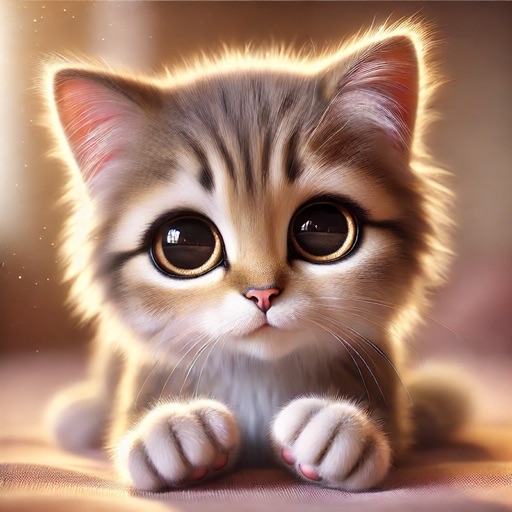
- CFA states that coat color and pattern descriptors describe the coat only and do not suggest the breed, if any, of the kitten or cat.
- American Shorthair is a registered CFA breed with a written standard; domestic shorthair is a description for an unregistered short coated cat, and the two terms are not interchangeable.
- A worldwide study of more than 1,100 cats sampled 17 random bred populations across five continents alongside 22 breeds, and found genetic diversity has remained broad across the random bred world.
- That same study found pure breeding was associated with a loss of genetic diversity, and that the loss did not correlate with how popular or how old a breed was.
- The 2014 domestic cat genome paper concluded that cat breeds were built by strong selection on specific mutations drawn from random bred populations, which is why unregistered cats carry breed associated traits.
What to look at
- Start with the paperwork, not the cat. A pedigree is a registry record naming the parents. Without one, the cat is described by coat and type rather than by breed.
- Name the coat length, because that is what the description turns on. Short and close lying gives domestic shorthair; semi long to long gives the parallel description, domestic longhair.
- Name the color and the pattern separately, the way a registry does. CFA's own convention is color first, then pattern, then coat length, for example a red mackerel tabby and white.
- Check the pattern is not being mistaken for a breed. Tabby, tuxedo, calico, tortoiseshell and torbie are all patterns that a domestic shorthair commonly wears.
- Compare against the American Shorthair standard if that is the question, since American Shorthair is a registered breed and a domestic shorthair with similar type is not the same thing.
- Expect breed associated traits to appear anyway, because the genome work shows breeds were selected out of exactly this population rather than added to it.
Where breeds actually came from
The relationship runs the opposite way from how people usually imagine it. Breeds were not added to the cat population; they were selected out of it. The high quality cat genome published in PNAS in 2014 concluded that cat breeds experienced strong selection on specific mutations drawn from random bred populations, using the gloving pattern of the Birman as its worked example. A worldwide survey published in Genomics in 2008 reached the same place from a different direction, tracing more than 1,100 cats across 17 random bred populations and 22 breeds and finding that most breeds derived from the indigenous cats of their stated region of origin. A domestic shorthair is the population the breeds were drawn from.
Why the term keeps causing arguments
Three separate things share the same shelf, and only one is a breed. American Shorthair is a registered CFA breed with a written standard, a required type and a pedigree behind every registered cat. Domestic shorthair is a description applied to a short coated cat with no recorded pedigree, used by shelters and veterinary records so that every cat has something in the breed field. Coat pattern names, tabby, calico, tuxedo, tortoiseshell, are a third thing again, and CFA is explicit that they describe the coat and do not suggest the breed if any. A cat can be a brown mackerel tabby domestic shorthair, and all three of those words are doing different work.
What a photo can and cannot tell you
A photo reads the things the description is actually made of: coat length, color, pattern, body type and head shape. It will tell you whether a cat is short, medium or long coated and what pattern it wears, and it will show whether the cat's type sits close to a written breed standard. What it cannot do is produce a pedigree, and for a domestic shorthair that is the whole point. There is no domestic shorthair standard to match against, because the term means the absence of a registry record rather than the presence of a type. If a cat has papers, the papers decide. If it does not, the honest answer is a description.
Related guides
- Is my cat a Maine Coon?: Probably not, and that is the ordinary answer rather than a disappointing one.
- Tabby cat: Tabby is a coat pattern, not a breed.
- Tuxedo cat: A tuxedo cat is a black and white bicolor, and bicolor is a pattern rather than a breed.
Sources
- Cat Fanciers' Association: Coat and Color Descriptions
- Cat Fanciers' Association: American Shorthair breed profile and show standard
- Lipinski MJ et al. (2008) The ascent of cat breeds: genetic evaluations of breeds and worldwide random-bred populations. Genomics
- Montague MJ et al. (2014) Comparative analysis of the domestic cat genome reveals genetic signatures underlying feline biology and domestication. PNAS